
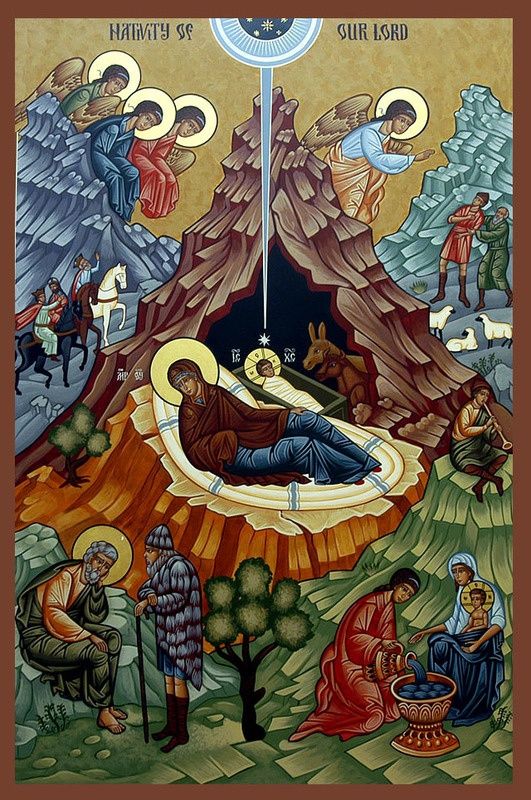

The Nativity Fast
The Nativity Fast, observed in the Eastern Catholic and other Apostolic Traditions, is a period of preparation for the celebration of Christ’s birth. Lasting from November 15 to December 24 (in the East), this period offers a unique opportunity for families to deepen their faith. Here’s a guide to engaging the Nativity Fast with a focus on prayer, fasting, good works, church services, confession, Scripture reading, and enriching family activities.
1. Fasting as a Family
Fasting is a central practice in the Nativity Fast, meant to shift our focus from physical to spiritual nourishment. Traditionally Eastern Catholics and Orthodox Christians fast from meat, dairy, and sometimes fish or oils, while Roman Catholics observe a simpler abstinence, typically on Fridays. Families can embrace fasting by:
• Creating a Plan Together: Before deciding on specific fasting practices, it helps to have a conversation about why fasting is important. Explain that fasting is a tool to focus more on God, practice self-discipline, and express love for others by sacrificing comfort or indulgence. When children understand fasting as a form of spiritual preparation for the Nativity, they’re more likely to feel involved and motivated.
• Where to start?: Meat Abstinence: Our Bishops have prescribed Wednesdays and Fridays as a starting point, or a minimum that everyone can join in together. During the Nativity Fast on these two days we should abstain from meat. This prescription is not mandatory for children, but they are encouraged to follow the minimum as much as they are able--this is up to the parent's discretion. Remember that fasting has always been a regular part of Christian life and children need to learn through example and experience.
• Additional Days or Foods: Some families may choose to extend abstinence to other days or include dairy and sweets. The family might decide to limit desserts or save sweets only for Sundays.
•Meal Planning: Prepare simple, plant-based meals together, focusing on wholesome foods like soups, vegetables, and grains. Involve children in choosing recipes to make the process collaborative and enjoyable. It is good practice to share recipes with other families at our parish.
•Meal Planning: Prepare simple, plant-based meals together, focusing on wholesome foods like soups, vegetables, and grains. Involve children in choosing recipes to make the process collaborative and enjoyable. It is good practice to share recipes with other families at our parish.
•Reducing Treats: Limit sweets or other luxury foods to emphasize simplicity. Save special treats for Sundays or feast days within the fast, like the feast of Entrance into the Temple of the Mother of God (Nov. 21), St. Nicholas Day (Dec. 6), Conception by St. Anne of the Mother of God (Dec. 9), which can be celebrated with a small treat as a break in the fast.
By engaging children in the fasting process, families can discuss how self-denial helps us grow in virtue, remember how much we need God in our life and build empathy for those in need.
•Using the Money Saved for Charity: This practice reminds us that fasting is not only about self-discipline but also about helping those in need. For example, families can take the money saved from a week of simple meals and use it to buy groceries for a struggling family in their community. Another option could be to use the savings to donate winter clothing or blankets to a shelter, helping those who may be cold or homeless during the winter season. Families could also choose to support local or international charities that provide food, water, or medicine to those in need. By giving to others, families turn their fasting sacrifice into an act of love, fostering compassion and teaching children about the joy of generosity.
• Adapt for Younger Children with Small Disciplines:
While younger children are typically exempt from strict fasting requirements, they can still participate in small ways to feel part of the family’s spiritual journey and to slowly learn the about seasons of abstinence. Here are a few ideas:
• Limit Treats or Sweets: Younger children might skip candy or save special snacks only for weekends or feast days.
• Special Snack on Fasting Days: Give children a specific fasting snack that they look forward to, like a favorite fruit or nuts, which teaches them to enjoy treats in moderation.
• Meat-Free Wednesdays and Fridays: For children who are able, you might encourage them to avoid meat with the family on Wednesdays and Fridays, providing plant-based alternatives that they enjoy.
2. Family Prayer and Attending Church Services
Prayer is a central part of the Nativity Fast, and the Church provides extra services and prayers to help us focus on Christ’s coming.
• Daily Prayer Time: Establish a specific time each day to pray together as a family, morning, evening, and before meals. Try incorporating the “Akathist for the Nativity of Christ.” or a daily "Rosary".
• Attending Services and Celebrating Feast Days: Families can make an effort to attend special services such as Vespers, Emmanuel Moleben or other services. Remember that we have one major feast day and several smaller beloved feasts: Entrance into the Temple of the Mother of God (Nov. 21 - One of the 12 Major Feasts), St. Nicholas Day (Dec. 6), Conception by St. Anne of the Mother of God (Dec. 9)
• Attending Services and Celebrating Feast Days: Families can make an effort to attend special services such as Vespers, Emmanuel Moleben or other services. Remember that we have one major feast day and several smaller beloved feasts: Entrance into the Temple of the Mother of God (Nov. 21 - One of the 12 Major Feasts), St. Nicholas Day (Dec. 6), Conception by St. Anne of the Mother of God (Dec. 9)
•Praying for Others: Set up a small “prayer intention” box or list where each family member can add someone they would like to pray for. Praying for others helps to shift focus from personal wants to the needs of others.
3. Confession and Spiritual Cleansing
Confession is a key way to prepare for Christ’s coming. As the fast invites us to repentance, a family confession can be a beautiful way to begin anew.
•Family Confession Day: Plan a day for everyone to go to confession together, followed by a special family activity like a simple meal or outing. Talk with children about the meaning of confession, focusing on God’s mercy and love.
•Examination of Conscience: Each evening, take a few minutes to review the day together as a family. Invite each family member to share something they’re grateful for, fostering a spirit of gratitude. If they feel comfortable, children might also mention something they want to improve on, although this may be more appropriate for a private conversation with parents. In general, this practice nurtures accountability, encourages personal reflection, and promotes growth in virtue.
4. Daily Scripture Reading and Spiritual Reading
Engaging with Scripture daily during the Nativity Fast is an excellent way to deepen the family’s understanding of the Incarnation.
•Jesse Tree: This tradition, common in both Western and Eastern Christian practices, traces Christ’s lineage and God’s plan of salvation. Each day, families read a short Scripture passage and add a corresponding ornament to the “Jesse Tree.” Jesse Tree reading plan can be found at the bottom of the document.
• Nativity Story: (Matthew 1:18-2:12 & Luke 1:26-38; 2:1-20) Read parts of the Nativity story each day, focusing on different figures like Mary, Joseph, the shepherds, and the Magi. Children can draw pictures or retell the story in their own words.
-Using a Bible adapted for children or a family devotional can make Scripture more accessible and engaging for younger family members.
• New Testament Challenge: Take part in our annual 40-day challenge to read the entire New Testament aloud by Christmas! This is a powerful spiritual exercise, and everyone is invited to join—read with your spouse or even involve children. Many take part each year and find it enriches the soul. Join us in this Advent discipline and make more time for Holy Scripture as we prepare for the Nativity.
• For Adults: Engaging in spiritual reading during the season leading to the Nativity helps prepare our hearts to receive Christ more fully. Reflecting on the stories, teachings, and lives of saints during Advent deepens our faith and reminds us of the humility, hope, and love Jesus brings to the world. These readings draw us closer to the mystery of the Incarnation, allowing us to better understand God’s gift of Himself. Ultimately, spiritual preparation aligns our minds and hearts with the true meaning of Christmas, making room for the peace and joy that Christ’s birth brings. Here are some examples of Recommended Spiritual Reading during the Nativity Fast Season:
•The Everlasting Man by G.K. Chesterton - An exploration of the Incarnation and the Nativity within the broader context of Christianity, rich in Catholic thought.
•Advent and Christmas with the Church Fathers edited by Thomas Aquinas - A collection of seasonal writings from the Church Fathers, offering Orthodox and Catholic perspectives on the Nativity.
• The Life of Christ by Fulton J. Sheen - A masterpiece on the life of Jesus, with powerful sections on the Incarnation and Nativity.
• Jesus of Nazareth: The Infancy Narratives by Pope Benedict XVI - A deep exploration of the Gospels’ accounts of Jesus’ birth, rooted in Catholic theology and insight.
• On the Incarnation by St. Athanasius - A profound treatise on the Incarnation, explaining why God became man, foundational in Orthodox and Catholic theology.
5. Family Activities and Advent Calendars
Creating meaningful family activities enhances togetherness and keeps the focus on the joy of Christ’s coming.
• Advent Calendar: The Advent calendar, popular in Western Christianity, can be customized with spiritual reflections, simple acts of kindness, or family activities. Each day could include something like “Pray for someone you know” or “Make a Christmas card for a neighbour.”
• Charitable Acts: Set aside time to help those in need. Families can volunteer at food banks, prepare care packages for the homeless, or donate to charities. Involve children in choosing the acts of kindness to give them a sense of purpose and compassion.
• Making Gifts Together: Rather than focusing on consumer gifts, make homemade presents or cards as a family to emphasize that love and thoughtfulness are the best gifts.
• Parents Read to Children: Reading to children during the Christmas fast nurtures family bonds and spiritual growth. Sharing stories with themes of faith, charity, and the Nativity helps children understand the season’s deeper meaning and instills values like compassion and humility. This quiet, reflective activity fosters family togetherness and creates cherished memories of the Christmas season.
Some Examples of Classic Works: “The Cricket on the Hearth, A Fairy Tale of Home” by Charles Dickens, “A Child’s Christmas in Wales” by Dylan Thomas, “The Shop of Ghosts” by G. K. Chesterton, “The Adventure of the Blue Carbuncle” by Arthur Conan Doyle, “The Gift of the Magi” by O. Henry (William Sydney Porter), “A Christmas Carol” by Charles Dickens.
6. Family Time Indoors and Outdoors
Setting aside dedicated family time allows for connection and rest, away from the busy holiday rush.
• Nature Walks: Take family walks to observe the changing season. Discuss how the world is “waiting” for spring, just as we wait for Christ’s coming. Some families use this time to gather pine cones or branches to make simple decorations.
• Game Nights or Storytelling: Use evenings for board games, storytelling, or discussing each family member’s highlights from the day. Simple activities can become meaningful when they’re intentional and build relationships.
7. Limiting Social Media and Digital Time
In a world saturated with media, limiting screen time allows families to focus on each other and on the meaning of the season.
• Digital Fasting: Choose one or more days each week to avoid social media, video games, or unnecessary internet use. This can be challenging, especially for teens, but it allows for richer family interactions.
• Quiet Times: Encourage quiet time each day, even if it’s just 15 minutes, for family members to read, pray, or reflect. Providing good books on saints or the Nativity story can make this time spiritually enriching.
8. Incorporating Symbolic Decorations
Bring the Nativity Fast into your home by incorporating simple, symbolic decorations as reminders of the season’s spiritual focus.
• Nativity Set: Set up a Nativity scene early in the fast, but consider waiting to add the baby Jesus until Christmas Eve. This can build anticipation and remind children of the true meaning of the celebration.
• Evergreens and Candles: Evergreen branches symbolize eternal life, while candles represent Christ as the light of the world. You could add a new candle each Sunday to a wreath, praying together as a family for Christ’s light to fill your hearts.
• Other examples: Put up a Christmas Tree, Display a Nativity Icon on the Prayer corner, Use Star Decorations to Symbolize the Star of Bethlehem, Include Angel Decorations Throughout the Home, Place a Candle in the Window to Welcome Christ, Decorate with Bells to Proclaim Christ’s Birth, Christmas lights.
The Nativity Fast offers families a rich opportunity to grow in faith, unity, and love for God. By focusing on fasting, prayer, church services, confession, Scripture reading, and quality time together, families can make this season a meaningful preparation for Christmas. Incorporating traditions like the Jesse Tree, Advent calendar, and acts of charity keeps the focus on Christ’s coming and helps transform the family home into a place of peace and reflection.
This season invites a break from the consumerism and busyness that can dominate the holidays, offering instead a time to reconnect with faith and with each other, all in anticipation of the joy of Christ’s birth.
_____________________________________________________________
Jesse Tree Reading Plan
Here is a 40-day Jesse Tree reading plan for the Eastern Catholic Nativity Fast, which starts on November 15 and leads up to Christmas on December 25. Each day includes a passage and a highlighted virtue or theme associated with the story. This reading plan celebrates the lineage and journey leading to the birth of Jesus Christ.
Week 1
- Creation – Genesis 1:1-2:3 | Virtue: Wonder
- The Fall of Man – Genesis 3:1-24 | Virtue: Repentance
- Noah’s Ark – Genesis 6:5-22, 7:1-24 | Virtue: Obedience
- God’s Promise to Noah – Genesis 9:8-17 | Virtue: Hope
- The Tower of Babel – Genesis 11:1-9 | Virtue: Humility
- God Calls Abram – Genesis 12:1-7 | Virtue: Faith
- The Covenant with Abraham – Genesis 15:1-6 | Virtue: Trust
Week 2
- The Sacrifice of Isaac – Genesis 22:1-18 | Virtue: Surrender
- Jacob’s Ladder – Genesis 28:10-17 | Virtue: Awe
- Joseph’s Dreams – Genesis 37:1-36 | Virtue: Courage
- Joseph in Egypt – Genesis 41:1-36 | Virtue: Perseverance
- Joseph Forgives His Brothers – Genesis 45:1-15 | Virtue: Forgiveness
- Moses and the Burning Bush – Exodus 3:1-12 | Virtue: Holiness
- The Passover – Exodus 12:1-28 | Virtue: Deliverance
Week 3
- Crossing the Red Sea – Exodus 14:10-31 | Virtue: Freedom
- The Ten Commandments – Exodus 20:1-21 | Virtue: Righteousness
- The Promised Land – Numbers 14:1-9 | Virtue: Vision
- Rahab and the Spies – Joshua 2:1-21 | Virtue: Mercy
- Ruth’s Loyalty to Naomi – Ruth 1:1-18 | Virtue: Loyalty
- Samuel’s Call – 1 Samuel 3:1-18 | Virtue: Listening
- David Anointed as King – 1 Samuel 16:1-13 | Virtue: Leadership
Week 4
- David and Goliath – 1 Samuel 17:1-51 | Virtue: Bravery
- God’s Promise to David – 2 Samuel 7:8-16 | Virtue: Covenant
- Solomon’s Wisdom – 1 Kings 3:4-15 | Virtue: Wisdom
- The Temple Built by Solomon – 1 Kings 8:1-21 | Virtue: Reverence
- Elijah on Mount Carmel – 1 Kings 18:17-39 | Virtue: Zeal
- Elisha and the Widow’s Oil – 2 Kings 4:1-7 | Virtue: Generosity
- Jonah and the Whale – Jonah 1:1-17, 2:1-10 | Virtue: Obedience
Week 5
- Isaiah’s Prophecy of the Messiah – Isaiah 9:2-7 | Virtue: Hope
- Daniel in the Lion’s Den – Daniel 6:10-23 | Virtue: Faithfulness
- Nehemiah Rebuilds Jerusalem – Nehemiah 2:1-8 | Virtue: Perseverance
- Esther’s Courage – Esther 4:10-17 | Virtue: Courage
- The Prophecy of the New Covenant – Jeremiah 31:31-34 | Virtue: Renewal
- John the Baptist Prepares the Way – Matthew 3:1-12 | Virtue: Preparation
- The Annunciation – Luke 1:26-38 | Virtue: Obedience
Week 6
- Mary Visits Elizabeth – Luke 1:39-56 | Virtue: Joy
- The Birth of John the Baptist – Luke 1:57-80 | Virtue: Faithfulness
- Joseph’s Dream – Matthew 1:18-25 | Virtue: Trust
- Journey to Bethlehem – Luke 2:1-5 | Virtue: Endurance
- The Nativity of Jesus – Luke 2:6-20 | Virtue: Love
These daily readings provide a scriptural journey through the Old Testament prophecies, key figures, and events leading to the birth of Jesus Christ. Each story offers a virtue or theme, helping families focus on meaningful aspects of faith, character, and the anticipation of Christ’s coming.